In the modern digital landscape, the problem isn’t a lack of data; it is a lack of direction. We are drowning in metrics, yet many organizations still operate on intuition. We rely on “best practices” and “gut feelings” to decide who to email, who to call, and what to offer.
The result? Inefficiency. We market to everyone to catch someone. We shout at the masses hoping for a whisper of interest. This “spray and pray” approach is no longer sustainable.
The core strategic question facing leadership today is simple: How do we invest our finite resources for the greatest possible return?
The answer lies in shifting from reactive execution to Predictive Intelligence. By building a strategy that forecasts customer behavior, we can stop guessing and start growing. This guide will walk you through the blueprint for building a predictive marketing engine that spans the entire customer life-cycle.
Part 1: The Strategic Foundation
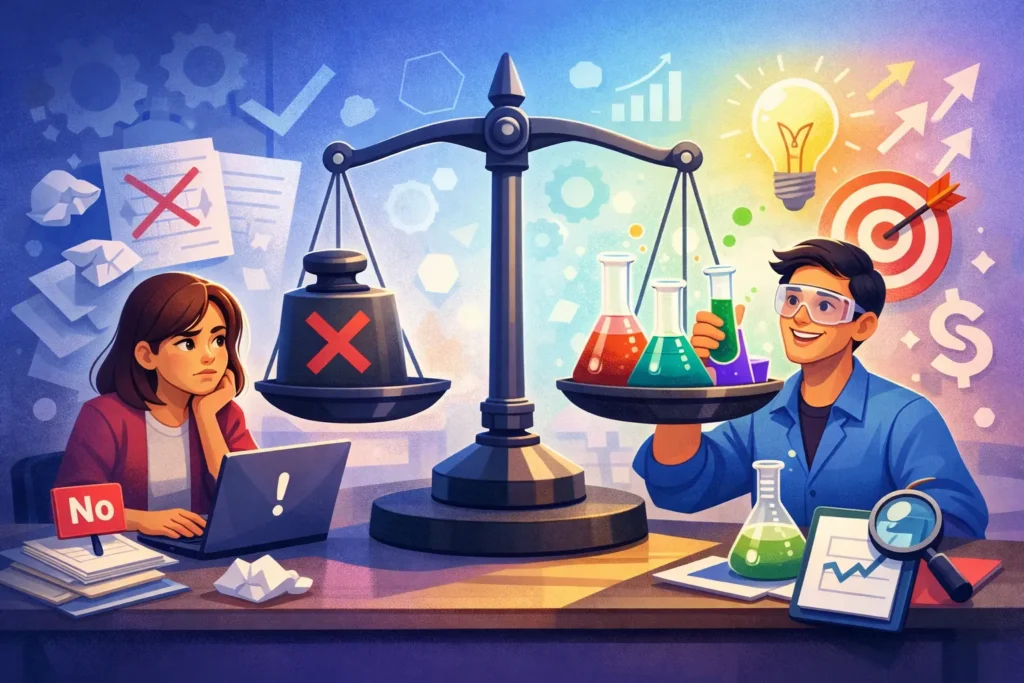
The Balance of Value and Cost
Before we discuss models and algorithms, we must address the fundamental economics of our operation. Marketing is a balancing act between two forces: Customer Value and Business Costs.
On one side of the scale, we want to maximize the value we extract from the market. On the other side, we have finite resources. Every marketing action, every sales call, and every email campaign carries a cost.
Crucially, this cost is not just monetary (like the price of a stamp or a PPC click). There is a hidden cost: Customer Attention. When we bombard a prospect with irrelevant messages, we degrade our brand perception and risk them hitting “unsubscribe.”
The goal of a predictive strategy is to tip this scale in our favor. We want to maximize customer value while minimizing the wasted effort and cost associated with chasing the wrong opportunities. We do this by moving from “guesswork” to “strategic guidance”.
The Shift: From Funnel to Infinity
Traditional marketing views the world as a funnel: you pour leads in the top, and customers fall out the bottom. Once the sale is made, the marketing job is largely seen as “done.”
A predictive strategy rejects this linear view. Instead, we view the customer relationship as a continuous Infinity Loop—a cycle that moves from lead to loyalty.
To navigate this journey effectively, we need to map the territory. The Customer Life-Cycle framework divides the relationship into four distinct stages, each presenting unique challenges and opportunities:
- Acquisition: Turning prospects into customers.
- Development: Deepening the relationship and growing value.
- Retention: Keeping valuable customers loyal.
- Winback: Re-engaging those who have lapsed.
A true predictive strategy does not just solve for one of these; it creates an intelligence layer that powers all four.
Part 2: The Step-by-Step Blueprint
How do we turn this theory into a functioning business engine? We build it stage by stage, using data to inform our decisions.
Step 1: Smarter Acquisition (The Filter)
The Problem: Acquisition is the most expensive part of marketing. The funnel is inherently inefficient. We generate thousands of leads, but most of them will never convert immediately. They require nurturing—multiple “touches” via email, phone, or retargeting.
If you treat every lead equally, you are burning cash. A sales manager’s nightmare is a team wasting hours calling leads who have zero intention of buying, while high-potential prospects sit in the queue, cold.
The Predictive Solution: We stop shouting at everyone and start talking to someone. By applying a predictive model to your lead pool, we can calculate a specific Conversion Score for every individual.
This isn’t intuition; it’s probability. The model analyzes historical data to tell us, for example, that “Lead A” has a 92% chance of converting, while “Lead E” has only a 15% chance.
The Execution:
- Rank Your Leads: Instead of sorting leads alphabetically or by date, rank the entire pool by their Predicted Conversion Score.
- Set a Threshold: This is the strategic lever. You determine a cutoff point—say, 75%.
- Leads above 75% are “Green.” These get your expensive resources (sales calls, direct mail).
- Leads below 75% are “Red.” You do not contact them with high-cost channels.
The Business Impact: This simple filtering process transforms the economics of acquisition:
- Higher Conversion Rate: Your sales team is only swinging at pitches they can hit.
- Lower CPA: You eliminate the wasted spend on the “Red” leads.
- Increased ROI: You achieve the same sales volume with significantly less investment.
Step 2: Customer Development (The Growth Engine)
The Problem: Once a customer is acquired, many companies switch to autopilot. They send the same generic newsletter or monthly offer to their entire database. This is a missed opportunity. Existing customers are your greatest asset, but only if you understand what they need next.
The Predictive Solution: The goal here is to maximize satisfaction and profitability by matching the Right Offer with the Right Customer.
Predictive modeling moves beyond “Will they buy?” to “What will they buy?” The model analyzes the customer profile and predicts the success probability of various potential offers—a new product, a service upgrade, or a related accessory .
The Execution: We utilize two proven strategies, guided by data:
- Cross-Selling: The model identifies related products a customer is likely to need.
- Example: A customer buys a drone. The model recognizes this pattern and immediately suggests buying batteries. It’s seamless, helpful, and profitable.
- Up-Selling: The model identifies customers with higher spending potential or specific usage patterns.
- Example: A hotel identifies a guest who values luxury. Instead of a standard room, the system proposes an upgrade to a suite with a better view.
The Business Impact: By presenting the offer with the highest probability of success for that specific individual, you increase the Customer Lifetime Value (CLV) without increasing your marketing spend. You are not selling harder; you are selling smarter.
Step 3: Retention (The Defense System)
The Problem: Churn is often silent. A customer doesn’t usually announce they are leaving until they are already gone. By the time you realize a high-value client has stopped engaging, it is often too late to save them. Reactive retention is expensive and ineffective.
The Predictive Solution: We need to move from reactive firefighting to proactive prevention. The predictive model acts as an early warning radar. It monitors customer behavior—login frequency, usage drops, support ticket sentiment—and assigns a Churn Risk Score.
The Execution: Imagine a dashboard that flags a top-tier customer with a 90% Churn Risk.
- Action: The system automatically triggers an intervention. This could be a personalized email from an account manager, a special discount, or a “We miss you” incentive.
- Timing: The key is acting before the customer cancels.
The Business Impact: Retaining an existing customer is significantly cheaper than acquiring a new one. By identifying potential churners early, you protect your recurring revenue stream and maintain the stability of your business base.
Step 4: Winback (The Hidden Goldmine)
The Problem: Every business has lapsed customers. Usually, these names sit in a database, gathering dust. We treat them as “lost causes.”
The Predictive Solution: This is a misconception. Winback is actually a highly efficient growth lever. Why? Because unlike strangers, we have rich historical data on past customers. We know what they bought, how often they visited, and what they liked.
The Execution: We apply the same ranking logic from the Acquisition stage to the lapsed customer pool.
- The model identifies which lapsed customers have a high probability of returning if contacted.
- It filters out the “bad churn” (customers who were unprofitable or difficult) and highlights the “good churn” (valuable customers who just drifted away).
The Business Impact: Winback models are often more accurate than acquisition models due to the depth of data available. Re-engaging these customers yields a high return because the cost of outreach is low (you already have their email), but the conversion potential is high.
Part 3: The Integrated Ecosystem
The biggest mistake organizations make is treating these four stages as silos. You cannot have one team doing “Predictive Acquisition” while another team does “Manual Retention.”
To truly succeed, you must build a Single Intelligent System.
Think of Predictive Intelligence as the central brain of your marketing operations.
- It feeds data into Acquisition to find the best leads.
- It feeds insights into Development to suggest the next product.
- It alerts Retention teams when risk is high.
- It guides Winback efforts to reclaim value.
This creates a seamless experience for the customer. They don’t feel like they are being processed by different departments; they feel understood by the brand.
Conclusion: Your Blueprint for Action
Building a predictive marketing strategy is not an overnight project, but it is the necessary evolution for any business that wants to scale efficiently.
To summarize, here is your strategic blueprint:
- MAP THE JOURNEY: Stop thinking in straight lines. Use the Customer Life-Cycle as your strategic guide.
- PREDICT THE OUTCOME: Stop guessing. Leverage your historical data to forecast customer behavior at every single stage.
- ACT WITH PRECISION: Stop wasting resources. Use your predictions to focus your budget, time, and talent exclusively on the opportunities that drive the greatest business impact.
The era of mass marketing is over. The era of precision marketing has arrived. It is time to stop shouting at everyone and start talking to the customers who matter.